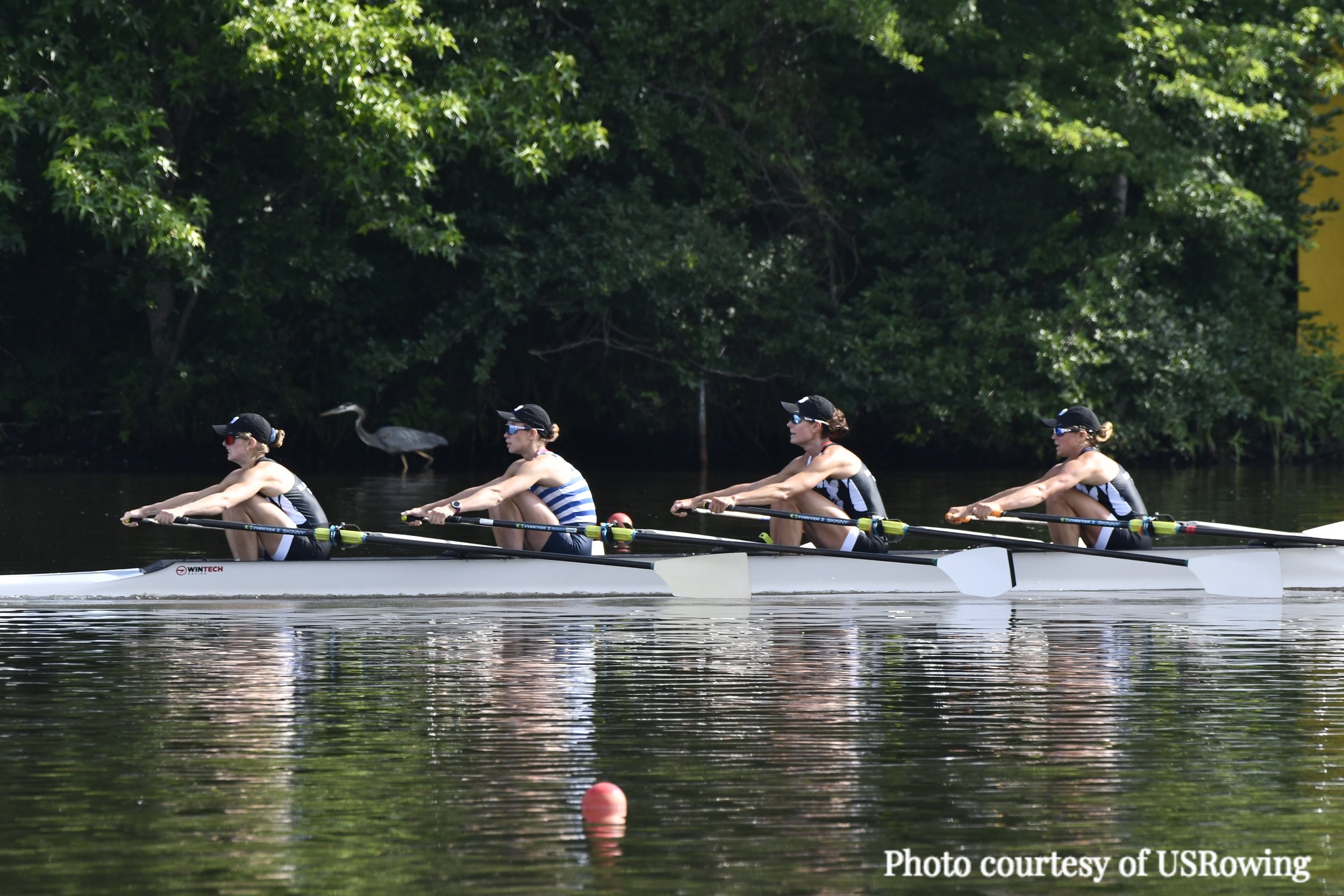
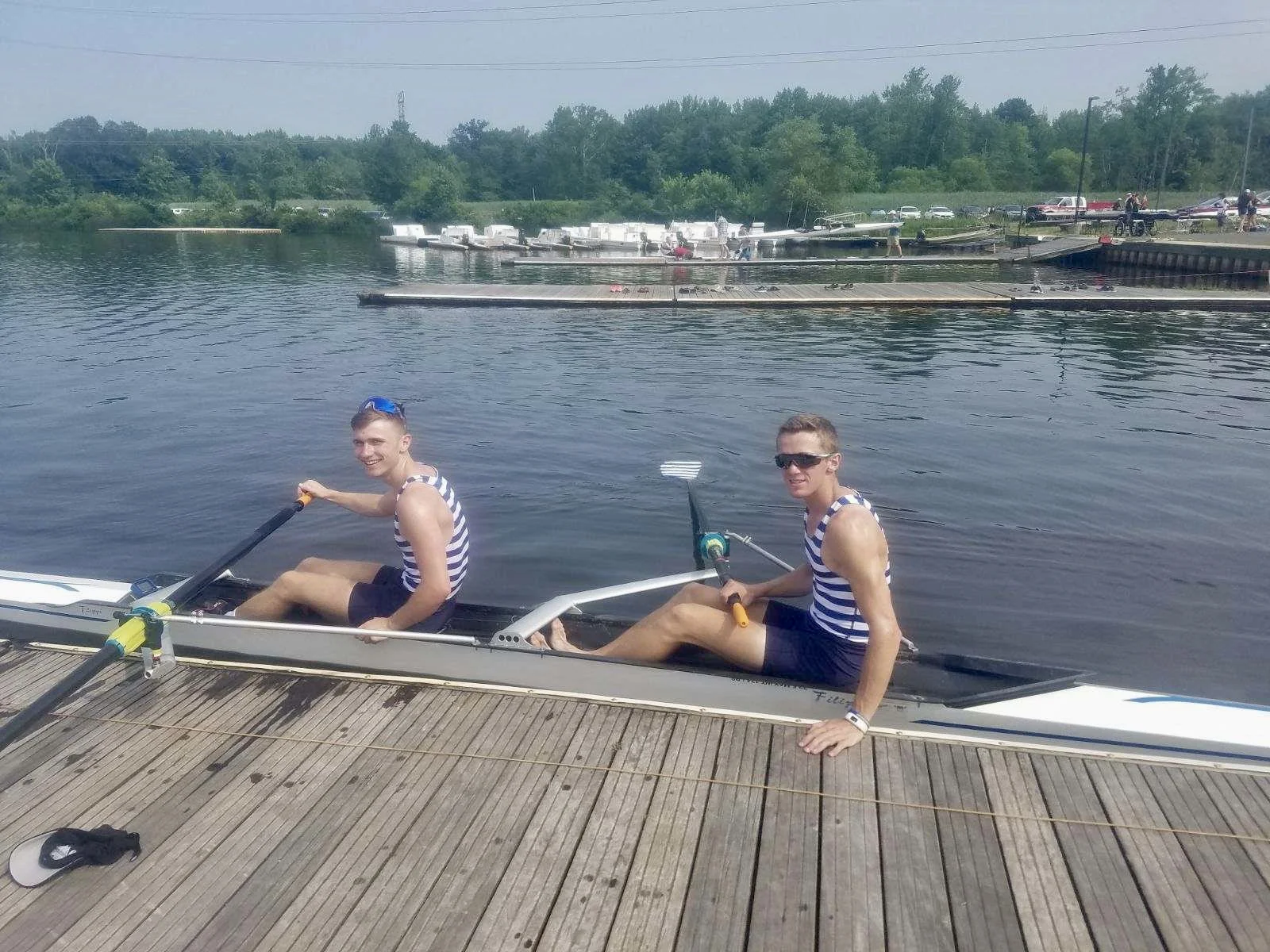
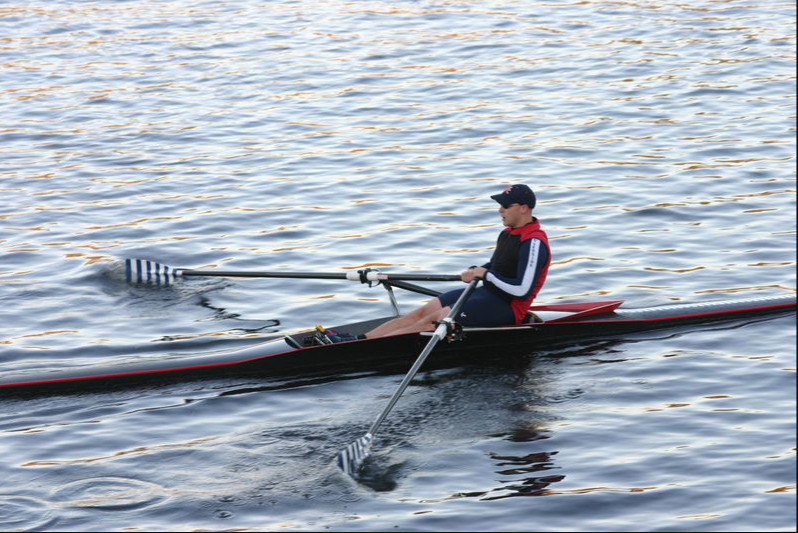
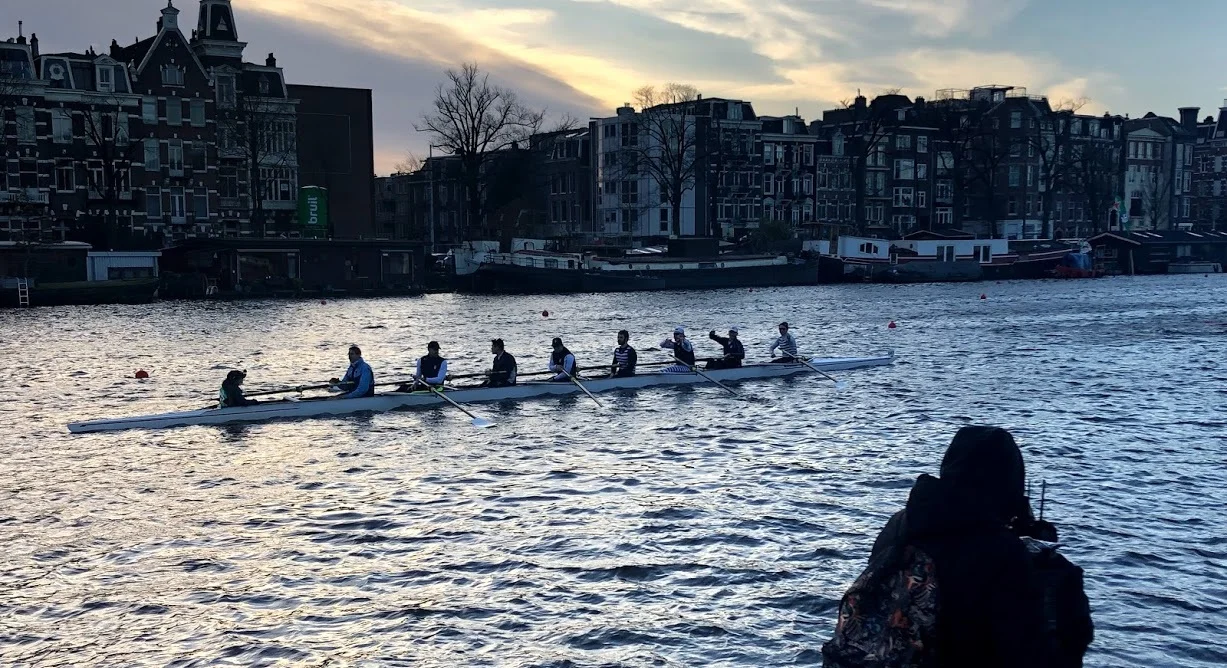
This month, Riverside High Performance Group athletes and independent scullers competed at the USRowing Senior Trials, with hopes of winning races and earning their spots on the US National team this summer. Ultimately, there were two winning crews wearing blue and white stripes: the Senior and U23 Men’s Lightweight Pairs.
Interview with HPG Coach Mark Grinberg
HPG Update - April and May US Rowing Trials
In Memoriam - Dave Schultz
Riverside Celebrates its 50th Anniversary
Crusher Casey 2019
Riverside Boat Club at the Heineken Regatta
The 1906 Championship
Riverside Boat Club 150th Anniversary History Series
By Dick Garver
Riverside Boat Club was one of the most prominent racing clubs in the country in the first decade of the 20th Century, a stature that was confirmed by its senior eight winning the national championship in 1906. It was a victory embroiled in controversy, however, involving—can you believe it—men’s sweep oars’ drinking. The story is told in the newest edition of the club’s 150th Anniversary History series.
In 1900, Riverside Boat Club’s eight, averaging 145 pounds, won the New England Amateur Rowing Association championship. The Boston Globe’s long-time rowing reporter and NEARA figure Eugene Buckley proclaimed it “the first racing club in America.” In 1902, he stated that, “Never in the history of rowing was there greater activity shown in turning out racing crews than is the case at present (at Riverside)”. Seat selection for its intermediate and senior sweep boats was more competitive than ever. Riverside’s 1903 senior eight, coached by George Faulkner and again New England champion, was considered the best the club had put on the water to-date. Reflecting the club’s prominence, in 1906 St. Josephs Boat Club’s highly regarded senior four made news by going over to Riverside as a group. Riverside’s ascendancy was confirmed in Worcester on August 11, 1906 when its senior eight claimed the national championship.
It was a claim that was not without controversy, however. Riverside and New York Athletic Club rowed to a dead heat in the championship race. After an interval, the National Association of Amateur Oarsman announced that the race would be re-rowed, even though it was after sunset. Riverside appeared to win. In the race’s aftermath, a disgruntled NYAC filled charges with the NAAO claiming that Riverside had replaced oarsmen who had been drinking prior to the decision to re-row the race with fresh rowers. The NAAO established a formal investigation. At its hearing in Boston on March 9, 1907, NYAC’s representative claimed that canoers who had been at the finish line as Riverside prepared to row up to the start of the row-over had asked how the boat would do given the intoxicated condition of one of its members. In a sworn statement they reported that someone in the crew answered, “Don’t worry about us, for we have three fresh men in the boat.” Once NYAC’s case was concluded, Riverside’s witnesses were sworn, beginning with George Faulkner, who recounted scurrying around in an automobile to reassemble the boat after the decision was announced to re-row the race. He testified that he was positive that no one but the oarsmen who took part in first race were boated in the second. Faulkner was followed by three members of the crew, who corroborated his statement.
At the hearing’s conclusion, the NAAO lead investigator stated his opinion that, “The Riversides have presented a very strong case, and with the testimony to come, I cannot see how their standing can be affected….I believe the Riversides told the truth.” The club’s 1906 national championship was upheld.
Riverside Boat Club's 1909 N.E.A.R.A. Banners
Riverside Boat Club 150th Anniversary History Series
By: Dick Garver
The New England Amateur Rowing Association banners hanging on the boathouse’s second floor attest to Riverside Boat Club’s long and accomplished history. Their embroidered silk and fringe evoke an era when rowing had a more prominent place in the sporting universe than it does today. To some extent, however, they are wall paper, classy but part of the background. When you learn the story behind the two hanging to the left of the porch door, awarded to the winners of the association’s July 4, 1909 regatta singles and eights events, those banners may take on a more vivid place in your consciousness.
Boston in 1909 was an industrial city of 670,000 and growing. A municipality of working class neighborhoods, scarcely more than 10 percent of its population was native to it for multiple generations. The North End’s “Honey Fitz” Fitzgerald, maternal grandfather of John F. Kennedy, was about to be returned to office as Mayor. The July 5, 1909 Boston Post’s front page displays the itinerary for newly elected President William Howard Taft’s visit. Its sports section’s first two pages have extensive coverage of the Red Sox, who are in 3rd place in the American League, and the Nationals (later the Braves), who are in 8th and last place in the National League. It reports that Harvard and Yale split their athletic competition during the past year, each winning two of their four events: Harvard had just won the boat race by six lengths and had won the football game the previous fall, while Yale won the track and baseball competitions. It also projects the makeup of the Yale eight in the Harvard-Yale boat race of 1910, almost a year away. The third sports page contains the headline “Big Regatta Today on Charles River.” It is to be the N.E.A.R.A.’s twenty-third annual July 4 weekend regatta. The story says that “The senior singles is the event that is causing the most talk, as the work of Carey Faulkner (of Riverside Boat Club) and Howard Murphy of the Boston Athletic Association has been watched for some time.”
Carey (James) Faulkner On The Charles River
With that build-up, I eagerly turned to the July 6 paper to read the race results. Its front page headline, accompanied by vivid pictures, announces, “Many spilled, one drowned in Charles River Regatta.” The sub-head reads, “All competing Eight-oared Shells Are Swamped” and “Life Savers Kept Busy Rescuing Oarsmen”. The story begins, “Fifty-four men all struggling madly for their lives in the waters of the Charles River Basin was the climax that marked the regatta of the New England Rowing Association held yesterday afternoon. All were thrown into the river within a few seconds of each other when their eight-oared shells sank under them as a result of the high waves that had been constantly filling the boats. In the rush of rescue one man was drowned. He was Edward Norley of (Parker Street in Lower) Roxbury, who pulled oar No. 3 in the St. Alphonsus boat.” It goes on to say that, “Boat after boat had swamped in nearly every one of the previous events….While the confusion was at its height one of the eight-oared shells drifted down the stream in two pieces. It had been cut in two by the prow of a (police) launch.”
Boston Post front page, July 6, 1909
The day’s racing had been delayed by a strong northwest wind. The last event, the race in question, was for junior eights. At 4:00 PM six boats, including one from Riverside, left the line. The Boston Medical Examiner, who happened to be the race referee, said that the St. Alphonsus boat clashed with another boat under the Harvard (Mass. Ave.) Bridge and sustained damage. Three boats, led by the Jeffries Point R.A. from East Boston, with Riverside a length behind, crossed the finish line and promptly sank. The other three boats, including the one from Roxbury’s St. Alphonsus Association, did not make it that far. Its Edward Norley was reported to be a strong young man, a steam fitter who planned to attend Fordham University in the fall. He couldn’t swim. Although a rope was thrown to him, he failed to hold on to it. The body had not been recovered.
The race results were reported in the sports section. The headline, apparently without intentional double meanings, states that, “Upsets Are the Order of the Day in the Regatta on the Charles.” The story begins, “The Metropolitan Boat Club of New York was represented in almost every event and the individuals performed well, but they were beaten in a match race with the Riverside eight-oared crew”—as is attested to by one of the banners. As for the other, the paper reports that, “Carey Faulkner lived up to expectations and played with the field in the senior singles, winning in easy fashion….the light craft could hardly live in the rough sea. It was a case of the men that could keep their boat afloat in most races rather than the speedier oarsmen.” Riverside’s winning time in the mile and one half eights race was 8 minutes 35 seconds. Faulkner’s winning time was 12 minutes 17 seconds, with Murphy of B.A.A second and Blackman of St. Alphonsus third. The story is accompanied with a photomontage including the Riverside eight at the dock and Faulkner sitting in his boat, and another picture of the lead three boats in the junior eights event in heavy waves silhouetted against the Cambridge gas works.
So when you glance at the turn of the 20th Century banners awarded to Riverside for victories in N.E.A.R.A. regattas, if you spot the two from July, 1909 you might pause a moment to reflect on the story behind them.
The 1985 Head of the Charles Regatta
Riverside Boat Club 150th Anniversary History Series
By Dick Garver
The results Riverside rowers produced in the 1985 Head of the Charles Regatta confirmed the club’s transformation from a moribund neighborhood sculling club into an ambitious, growing organization dedicated to high quality rowing, both sculling and sweeps, at all levels of the sport.
Having decided not to replace Northeastern University, which rented two-thirds of the boathouse, when the college moved into its own building, in 1983 President Jim Hanley, Will Melcher, Ted Van Dusen and likeminded members embarked on an ambitious program to attract enough rowers to Riverside to make it self-sustaining.
Jim Hanley (stroke) Will Melcher (bow)
Although it was not entirely recognized at the time, their decision coincided with a rising level of participation in the sport across the country. The founding of Community Rowing Inc. in 1985 was a local manifestation. Within this context, the decision that perhaps contributed most to Riverside’s turnaround was to employ a coach. In an era in which coaching at Boston rowing clubs was volunteer, it would make Riverside the only one on the Charles River to offer professional training. In the face of old-guard resistance, Hanley hired Doug Clark, a former Canadian national team coach then residing in Boston, who embarked on an ambitious program to make the club a racing powerhouse and the home base of U.S. internationals. Announcing his expectation that Riverside rowers would be the most technically accomplished on the river, club or college, Clark focused his rowers on the two-thirds of the stroke when their oars are out of the water. In his words, “Moving the boat involves more than power. It requires deep awareness on how the hull is moving in the water.”
Doug Clark
Fortuitously, Clark’s ambitions coincided with renewed efforts by United States Rowing and the United States Olympic Committee to raise the level of the country’s international competitors. The organizations funded two training centers. One was in Seattle. The other was the former Boston Rowing Club located in Weld Boathouse, which, with both formal and informal support from Harvard University, became the Boston Rowing Center. Rowers hoping to make the national team were drawn here. Clark’s coaching attracted a number of them to Riverside, including future national team rower Molly (Hoyle) Haskell, who in 1985 was the fourth person to enroll in his summer program. Having come to Boston to compete for a national team boat but increasingly discouraged at BRC, she received encouragement from Clark, Hanley, Van Dusen and other members and, in her words, “found a home at Riverside.”
Morning Practice Through Weeks Bridge.
From left to right: John Marden (1985 Nationals Medalist), Vaclav Stejskal (former Czech National Team), Susan Gwen-Timothy (later on Canadian National team) and Maria Lane in the double, and Ted van Dusen.
On the strength of Clark’s coaching and the arrival of rowers like Molly, 1985 proved to be Riversides’ breakthrough year. It medaled at the Bay State Games, its own Riverside Sprints and Cromwell Cup, and regional races from New England to Philadelphia, and finished third in the National Championships team points trophy behind Vesper and NYAC, with wins in the senior lightweight double (Ted Marks and Rick Gales), senior heavyweight double (John Marden and Bill Randall), intermediate lightweight single (Ted Marks), and placed a club member in the winning mixed double. Clark took a large contingent to the Canadian Henley Regatta, where Riversidewon nine women’s events, including six junior sculling titles. Each women sculler placed in the top three in her event. Among them, Carey Beth (C. B.) Sands, a future United States Rowing Hall of Fame member, won the junior and senior lightweight women’s single; she and Ruth Kennedy won in the junior and senior lightweight double and quad; while Izzie Gordon, Deb Fine, Maria Lane, and Mary Anczarski placed second in the quad. On the men’s side, Dan Chernoff and Jeff Parks won not only the junior but the senior lightweight double event. With these results, the club began its history of continuous success in Canada.
Let her run: Maria Lane, Susan Gwen-Timothy, Will Melcher and Ned Cooke
Riverside’s re-emergence as a rowing force culminated in the Head of the Charles that fall. Although regatta records do not identify the 1985 points winner, Clark clearly remembers Harvard coach Harry Parker pulling alongside the dock to congratulate him and the club on winning the trophy, the first club ever to do so. Riverside rowers having internalized the mindset espoused by Clark that they would dominate the river, they confirmed the club’s ascendancy in 1986. Led by Sands’ first place in the lightweight women’s single, it finished second in the points trophy behind Harvard and ahead of Yale. Four Riverside rowers placed in top three, including Maria Lane’s third in the women’s club single event.